Free UK Delivery on All Orders

By Eoin O'Brien2026-05-075 min read

The Ultimate Guide to Night Vision Binoculars: Seeing the UK's Wildlife After Dark

A practical buyer's guide for UK outdoor enthusiasts covering night vision technology, specifications that actually matter, and how to pick the right optics for wildlife watching, security, and fieldwork in British conditions.

How Night Vision Actually Works

Close up of night vision binoculars being used in the field

Night vision binoculars amplify available light — moonlight, starlight, even ambient urban glow — to produce a visible image in near-total darkness. That's the short version. The longer explanation involves photon conversion, image intensifier tubes, and infrared illumination, but you don't need a physics degree to make a smart purchase.

I got into this gear a few years back. Living off the Ormeau Road in Belfast, you'd think there's not much wildlife to speak of. Wrong. Foxes, hedgehogs, bats along the Lagan towpath — the city's alive after dark if you've got the right kit.

The Basic Principle

Traditional image intensifier tubes capture photons through an objective lens, convert them to electrons via a photocathode, amplify those electrons through a microchannel plate, then convert them back to visible light on a phosphor screen. That green-tinted image you associate with military footage? That's Generation 2 or Gen 3 intensifier technology at work.

Digital systems work differently. They use a CMOS sensor (similar to your phone camera) paired with infrared LED illuminators to capture and process the scene electronically. The result displays on a small internal screen. No green tint — you get black-and-white or even full-colour output depending on the model.

Types of Night Vision Technology

There are three main categories you'll encounter when shopping for infrared night vision goggles or binoculars in the UK market. Each has trade-offs.

Generation 1 (Analogue)

The cheapest option. Gen 1 devices amplify light roughly 1,000x. They're decent for casual garden watching within 75–100 metres but suffer from edge distortion and shorter tube life (around 1,500 hours). Prices start from £80–£150.

Generation 2 and 3 (Analogue)

Military-grade gear. Gen 2 amplifies 20,000x; Gen 3 pushes past 30,000x with gallium arsenide photocathodes. Brilliant clarity, but you're looking at £1,500–£5,000+. For most UK wildlife enthusiasts, this is overkill unless you're doing professional survey work.

Digital Night Vision

This is where the market's moved in 2026. Digital night vision goggles use IR illumination combined with high-resolution sensors — some now reaching 4K capture at 112MP. They're lighter, cheaper than Gen 2/3, and can record video. The HotPeak 4K night vision binoculars are a solid example: 112MP resolution, 12x digital zoom, 5000mAh battery, and they ship with a 64GB card included.

So what's the catch? Digital units need battery power constantly (analogue Gen 1 can work passively in moonlight). There's also a slight processing lag — typically 30–50 milliseconds — which won't bother a wildlife watcher but matters for fast tactical applications.

How to Choose the Best Night Vision Binoculars for UK Conditions

High-quality night vision binoculars suitable for UK outdoor conditions

The best night vision binoculars for your situation depend on three things: what you're watching, where you're watching it, and how much you'll realistically use them. Here's my framework after testing multiple units across different conditions.

Consider Your Environment

UK conditions are specific. We get heavy cloud cover roughly 70% of nights (Met Office data), which means less ambient light for passive systems. Rain, fog, and condensation are constant threats. Any device you buy needs an IP rating of at least IP56 for reliable outdoor use. Rubber armouring isn't just cosmetic — drop a £300 optic on wet limestone and you'll be glad of it.

Detection Range vs. Recognition Range

Manufacturers love quoting maximum detection range. "See up to 500 metres!" Aye, you might detect something's there at 500m. But can you tell if it's a badger or a bin bag? Recognition range — where you can identify species — is typically 40–60% of the stated detection range. A device claiming 400m detection will let you identify animals at roughly 160–240m in practice.

Weight and Ergonomics

You'll be holding these up to your face for extended periods. Anything over 800g gets tiring after 20 minutes without a tripod. The best digital night vision goggles in the sub-£300 bracket weigh between 500–750g. Worth checking before you buy.

Quick Selection Guide:
  • Garden wildlife (under 50m): Digital, 3–5x zoom, IR illuminator — budget £80–£150
  • Field surveys and nature reserves (50–200m): Digital 4K, 8–12x zoom, 850nm IR — budget £150–£350
  • Professional ecology work (200m+): Gen 2 analogue or premium digital — budget £500–£2,000
  • Security and property monitoring: Digital with recording, wide FOV — budget £150–£400

Key Specifications That Actually Matter

Spec sheets can be overwhelming. Here's what to focus on and what's mostly marketing fluff.

Sensor Resolution

Higher resolution means better detail at range. The jump from 1080p to 4K is genuinely noticeable — you can distinguish individual feather patterns on tawny owls at 80m with a 4K sensor versus just seeing a blob shape at 1080p. The best 4K night vision goggles now offer 112MP photo capture, which is brilliant for documentation.

IR Illuminator Wavelength

850nm illuminators produce a faint red glow visible to humans (and some animals) but offer stronger illumination. 940nm illuminators are completely invisible but provide roughly 30–40% less range. For wildlife that's easily spooked — deer, badgers — go 940nm. For general use, 850nm gives better bang for your buck.

Optical vs. Digital Zoom

Optical zoom maintains image quality. Digital zoom crops and enlarges, degrading the image. A unit advertising "12x zoom" might be 3x optical + 4x digital. Check the breakdown. That said, with a 4K sensor, 4x digital zoom still produces usable 1080p-equivalent imagery. It's not the disaster it was five years ago.

Battery Life

Critical for extended sessions. A 5000mAh battery typically delivers 6–8 hours with IR active. Smaller 2000mAh units might only manage 3–4 hours. I've been caught out on the Lagan towpath at 11pm with a dead unit — not ideal. Always carry a USB power bank as backup; most modern digital units charge via USB-C.

UK Wildlife Watching: What You'll Actually See

Watching nocturnal wildlife in the UK with night vision optics

The UK has more nocturnal wildlife than most people realise. Here's what's out there and what spec you need to spot it.

Badgers

Active from dusk, typically emerging 30–60 minutes after sunset. You'll want 940nm IR (they're sensitive to red light), minimum 5x magnification, and patience. Sett entrances are usually within 30–50m viewing distance, so even budget digital units work well. The nocturnal wildlife watching guide on HotPeak covers positioning in more detail.

Bats

Fast-moving and small. You need wide field of view (minimum 7°) and fast sensor refresh rates. 4K night vision binoculars with 30fps video capture can track pipistrelles in flight — something that was impossible with consumer gear even three years ago. There are 18 bat species in the UK, and Belfast alone has at least 8 confirmed species along the river corridors. (Worth a dedicated evening out if you're ever up that way.)

Owls and Nightjars

Barn owls hunt open fields at 2–5m height. You'll want 8–12x zoom to watch hunting behaviour from field edges (50–150m distance). Tawny owls are woodland birds — shorter range but you need good low-light sensitivity under tree canopy where even moonlight barely penetrates.

Deer

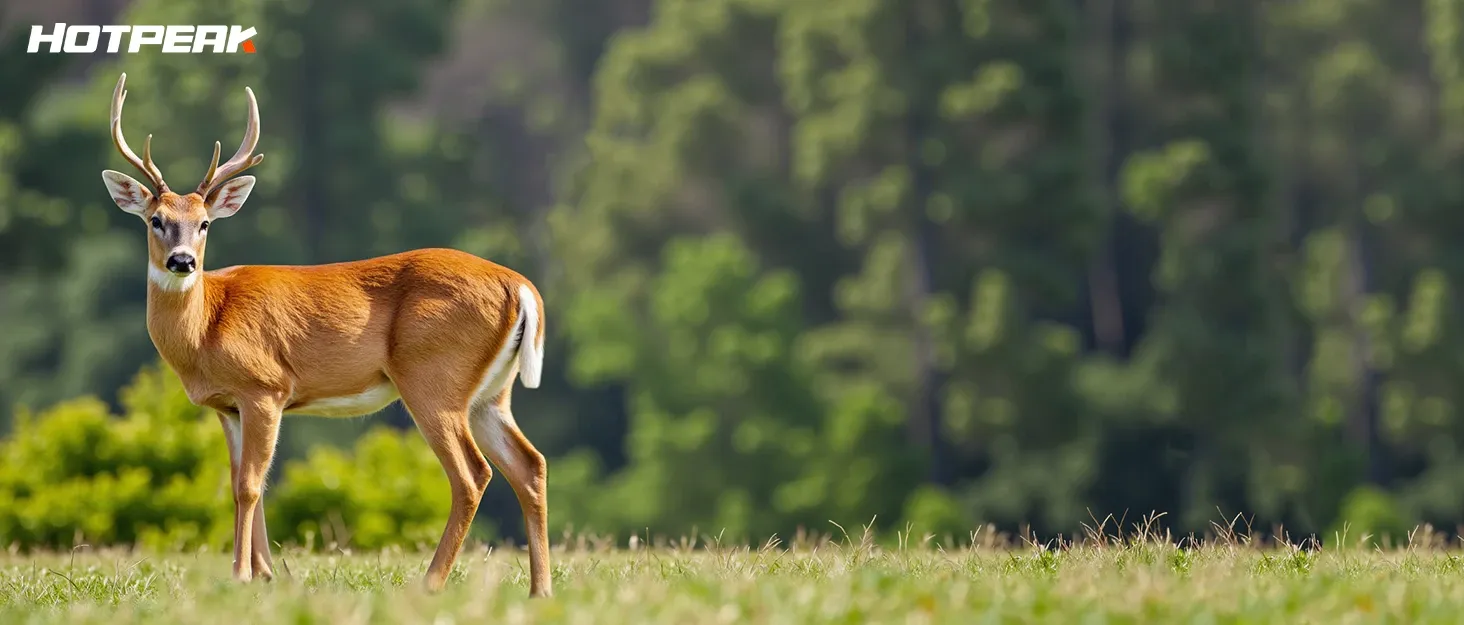
Muntjac and roe deer are crepuscular to nocturnal. They're larger targets so magnification matters less, but detection range does. A unit with 300m+ effective range lets you scan field edges without disturbing them. Night vision binoculars for adults with 10x+ zoom are ideal here.

If you're looking for a gift for a wildlife enthusiast, a decent digital night vision unit opens up an entirely new world for them. My brother-in-law got one last Christmas and he's been out every clear night since.

Product Comparison: Night Vision Binoculars Available in 2026

Comparison of different night vision binocular models for 2026

Here's how the current market stacks up across key specifications. I've focused on units actually available to buy in the UK with realistic delivery times.

Feature Budget Digital (£80–£150) Mid-Range Digital 4K (£150–£350) Premium Digital (£350–£700) Gen 2 Analogue (£1,500+)
Resolution 1080p / 12–36MP photo 4K / 112MP photo 4K+ / 112MP photo N/A (optical)
Effective Range 100–200m 200–400m 300–500m 400–800m
Zoom 3–5x digital 8–12x (optical + digital) 10–20x (optical + digital) 3–7x optical
Battery 2000–3000mAh (3–5 hrs) 5000mAh (6–8 hrs) 5000–8000mAh (8–12 hrs) 40–60 hrs (CR123A)
IR Wavelength 850nm 850nm / 940nm switchable 940nm N/A (passive)
Video Recording 720p–1080p 4K @ 30fps 4K @ 60fps Requires adapter
Weight 400–600g 550–750g 650–900g 800–1200g
Weather Rating IP54 IP56 IP67 IP67–IP68
Best For Garden, casual use Field wildlife, security Professional surveys Military, professional ecology

The mid-range bracket offers the best value for most UK users in June 2026. You're getting 4K capture, decent battery life, and enough range for 90% of wildlife scenarios. The HotPeak 4K unit with 112MP sensor and 12x zoom sits squarely in this sweet spot — 5000mAh battery, 64GB card included, and the infrared tech handles our typically overcast British nights without issue.

Frequently Asked Questions

Frequently asked questions about night vision technology and usage
Are night vision binoculars legal in the UK?

Yes, night vision binoculars are fully legal to buy, own, and use in the UK without any licence. Restrictions only apply when combining night vision with firearms for hunting, which requires specific permissions under the Wildlife and Countryside Act 1981. Standalone observation use for wildlife, security, or recreation is unrestricted across England, Scotland, Wales, and Northern Ireland.

What's the difference between digital and analogue night vision?

Analogue night vision uses vacuum tube technology to amplify existing light, producing the classic green image. Digital night vision uses CMOS sensors with infrared illuminators, similar to a camera. Digital units are cheaper (£80–£350 vs £1,500+ for Gen 2 analogue), can record video in 4K, and weigh less. Analogue offers superior passive performance in very low light without IR emission.

How far can night vision binoculars see?

Detection range varies from 100m for budget digital units to 800m+ for Gen 2 analogue devices. Recognition range — where you can identify what you're looking at — is typically 40–60% of stated detection range. A mid-range 4K digital unit claiming 400m detection will let you identify wildlife species at approximately 160–240m in typical UK conditions with cloud cover.

Can animals see infrared illuminators?

Most mammals cannot see 940nm infrared light at all. Some animals can detect 850nm IR as a faint red glow — deer and wild boar have shown avoidance behaviour around 850nm sources in studies. For sensitive species like badgers, choose 940nm illumination. Birds generally cannot detect either wavelength, making both suitable for owl and nightjar observation.

What resolution do I need for wildlife identification?

For species identification at 50–100m, 1080p sensors are adequate. For detailed observation — distinguishing individual markings, watching behaviour, or photographing for records — 4K resolution with 36MP+ photo capture makes a significant difference. The jump to 112MP sensors available in 2026 models allows cropping images while retaining identification-quality detail at distances up to 200m.

Do night vision binoculars work in complete darkness?

Digital night vision with active IR illumination works in absolute zero-light conditions — underground, sealed rooms, moonless nights under heavy cloud. Analogue Gen 1 devices need some ambient light (starlight minimum) to function. Gen 2 and Gen 3 analogue units can operate in extremely low light (0.001 lux) but still need trace photons. For guaranteed UK performance on overcast nights, digital with IR is the reliable choice.

Key Takeaways

  • Digital 4K night vision binoculars offer the best value for UK wildlife watchers in 2026 — mid-range units (£150–£350) cover 90% of use cases with 112MP sensors, 12x zoom, and 6–8 hour battery life.
  • Choose 940nm IR for sensitive wildlife — badgers and deer can detect 850nm illumination, but 940nm is completely invisible to all UK mammals.
  • Recognition range is 40–60% of advertised detection range — a device claiming 400m will let you identify species at roughly 160–240m in typical British overcast conditions.
  • Night vision devices are fully legal in the UK — no licence needed for observation use; restrictions only apply when combined with firearms for hunting.
  • Weather resistance matters more than maximum zoom — IP56 minimum for regular UK outdoor use; condensation and rain will ruin unprotected optics faster than you'd expect.
  • Battery capacity determines your session length — 5000mAh gives 6–8 hours with IR active; always carry USB-C backup power for extended watches.
  • The UK has 18 bat species, widespread badger populations, and increasing urban fox density — there's genuinely more nocturnal wildlife within 5 miles of your home than most people realise.

Ready to try HotPeak?

Shop Now — £82.48

HotPeak

HotPeak is a British brand committed to delivering cutting-edge night vision technology for outdoor enthusiasts and security professionals. Our ultra-high resolution goggles combine precision and reliability, empowering users to see the unseen, from the wild countryside to urban perimeters.

© 2026 HotPeak. All rights reserved.