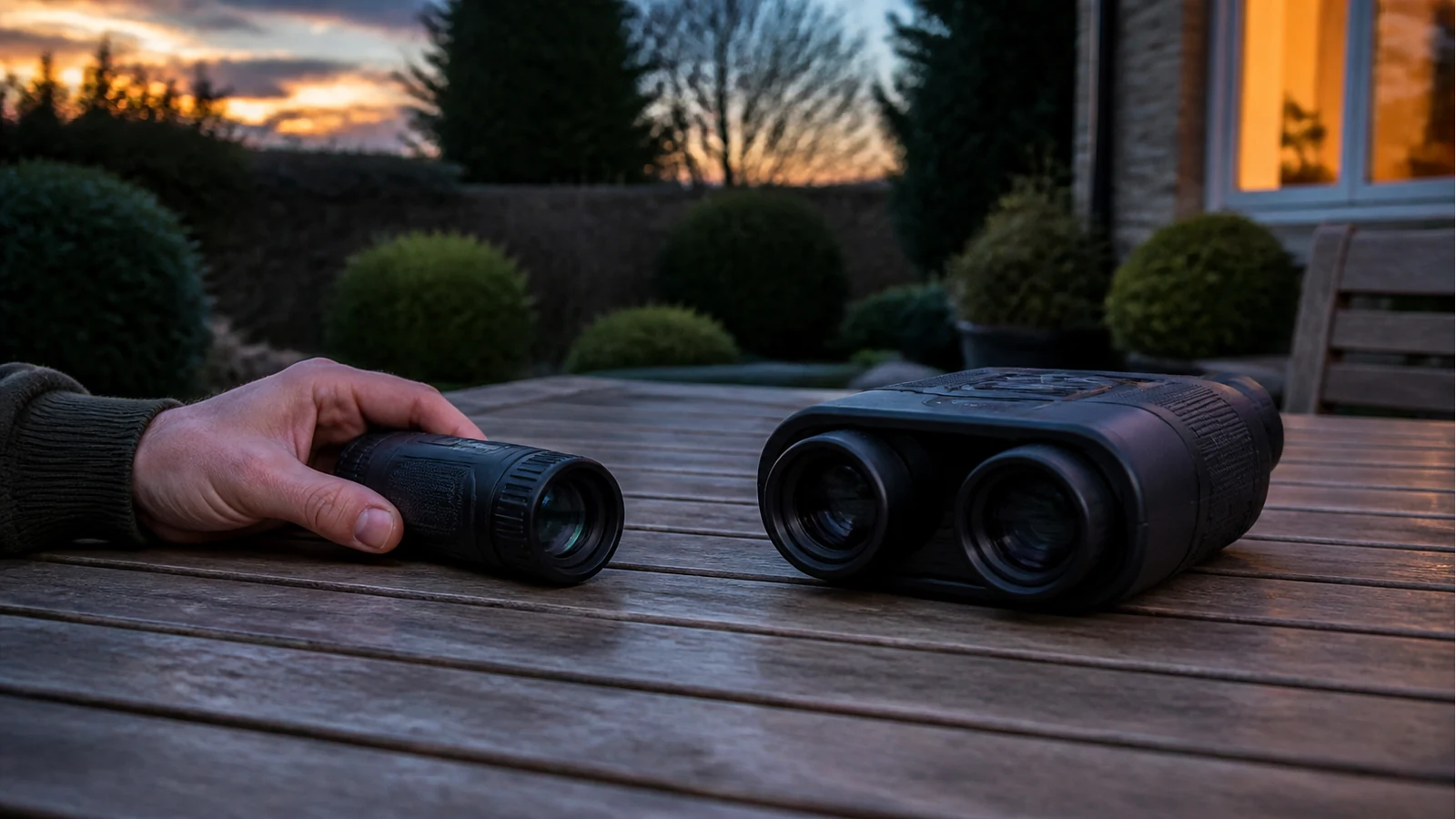
Night Vision Monocular Vs Binocular Uk
Direct answer: choose a monocular if you want the lightest tool for quick scans while walking. Choose a binocular-style digital viewer if you expect longer seated sessions, garden watching or a more comfortable two-eye viewing posture. The best form factor is the one that matches how you will actually use it after the first week.
Many beginners make this decision backwards. They start with the most impressive-looking shape, then discover it is awkward for their routine. Instead, start with the job: pocket scan, garden chair, campsite edge, hide session or occasional property glance.
Form-factor comparison
| Question | Monocular | Binocular-style digital viewer |
|---|---|---|
| Carry while walking | Usually easier and lighter | Bulkier, better in a bag or around the neck |
| Long seated watching | Can tire one eye | Often more comfortable for steady sessions |
| Quick scan from a pocket | Strong | Less convenient |
| Sharing with family | One person at a time | Screen-based digital viewers can be easier to show others, depending on model |
| Beginner learning curve | Simple if controls are minimal | Still simple if buttons and menus are clear |
Where monoculars win
Monoculars are practical when you are moving: checking a footpath, scanning a woodland edge, or keeping weight down. PumaWatch's wildlife optics discussion treats monocular formats as useful spotting tools, which matches the quick-scan role.
The trade-off is comfort. Holding one eye to a small viewer can feel fine for a minute and irritating after twenty. If your main plan is to sit in a garden chair waiting for a hedgehog, a monocular may be too minimal.
Where binocular-style viewers win
Binocular-style digital viewers suit people who settle into a session. Nature Travel Guide's UK night-vision overview contrasts budget monoculars with binocular digital units for clearer identification and comfort in casual wildlife use.
They also feel more familiar to people who already use daytime binoculars. The compromise is carry size. For hiking, dog walking or quick trips from the car, bulk can decide whether the device comes with you or stays at home.
Do not overbuy the shape
Specialist tube-style equipment, helmet-mounted systems and professional optics are not necessary for most UK garden distances. Blackwood Outdoors' night vision buying guide stresses matching device type to wildlife observation needs such as clarity, field of view, magnification and handheld comfort.
Your decision path
If your first use is walking and checking, start with a monocular. If your first use is sitting and watching, choose a binocular-style viewer. If your first use is recording garden moments, prioritise the recording workflow and screen comfort over the shape alone.
For a broader buying path, use the beginner night vision guide. If price is the main concern, read what budget night vision can realistically do before comparing models.