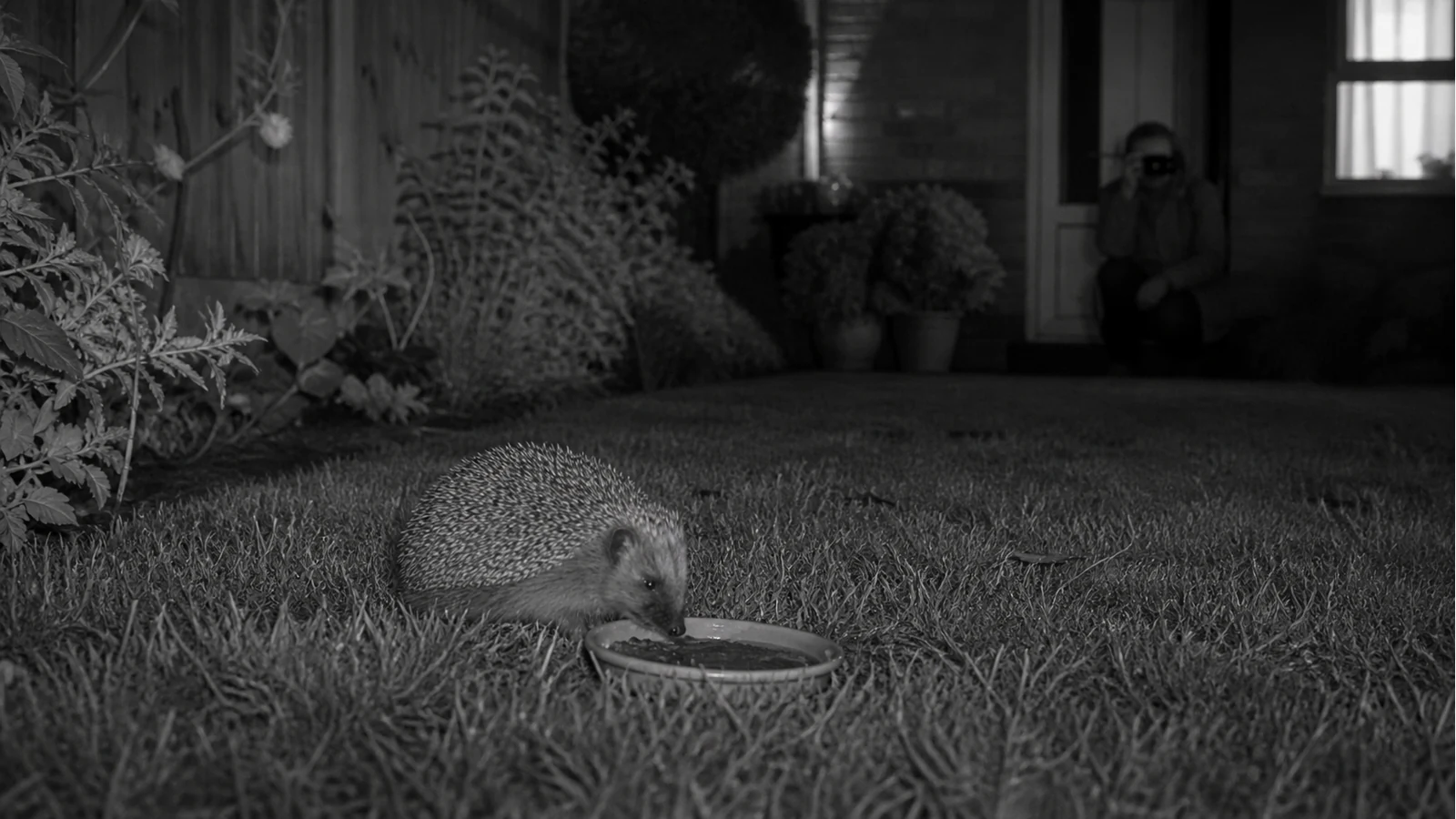
Can hedgehogs see infrared light?
Direct answer: hedgehogs are not known to see true infrared light in the way some specialised animals detect infrared radiation. For UK garden watchers, the more practical concern is the faint visible red glow from some 850nm IR emitters, plus ordinary disturbance from movement, noise, scent and getting too close.
That distinction helps avoid two bad assumptions. Do not assume every IR device is completely invisible to wildlife. Also do not assume a hedgehog is being harmed simply because an infrared illuminator is present. The careful approach is to reduce disturbance regardless.
What hedgehog vision evidence suggests
Wildlife Online's European hedgehog senses summary describes hedgehog vision as rod-dominated and secondary to smell and hearing, with sensitivity centred in the visible spectrum rather than a known infrared specialism. That supports a cautious phrasing: there is no good public evidence that hedgehogs see true IR as a normal visual colour.
But garden observation is not only about wavelengths. A hedgehog can still react to footsteps, a door opening, a human smell near the feeding station, or a device placed too close.
850nm vs 940nm in plain English
Many consumer night vision devices use infrared illumination. AiScopes' 850nm vs 940nm guide explains the practical trade-off: 850nm often gives stronger illumination for digital sensors but may show a faint red glow at the emitter; 940nm is more covert at the source but can appear dimmer to many sensors.
For hedgehogs, that means the visible red dot on the device is more relevant than an invisible beam. If you notice animals avoiding the setup, reduce intensity, increase distance or change position.
Low-disturbance garden checklist
- Use the lowest IR level that lets you see enough.
- Stay still and watch from a distance rather than following the animal around.
- Avoid white torches on the feeding station.
- Do not block routes, nests or gaps under fences.
- Keep pets away during feeding-station watching.
- Stop the session if the animal repeatedly freezes, flees or changes route because of you.
Is night vision better than a torch?
For live watching, usually yes, because it avoids bright visible glare. Nature Travel Guide's UK wildlife night-vision guide treats IR illumination as a way to observe without white-light disturbance, while still noting the 850nm/940nm discretion trade-off.
If you do not want to be present, a camera may be the quieter choice. The night vision vs trail camera comparison explains that split.
The safe conclusion
You can reasonably use infrared night viewing for hedgehog watching if you stay cautious: no bright torch, no close pursuit, no handling, and no assumption that technology makes you invisible. The welfare standard is not "can the animal see the wavelength?" It is "does my setup let the animal behave normally?"