Night Vision Vs Trail Camera For Garden Wildlife Uk
Direct answer: choose a trail camera if you want unattended proof of what visited while you were asleep. Choose handheld digital night vision if the point is to watch live, from a chair or kitchen doorway, without using a white torch. For most UK gardens, the decision is less about headline range and more about whether you want evidence later or the pleasure of seeing the animal in the moment.
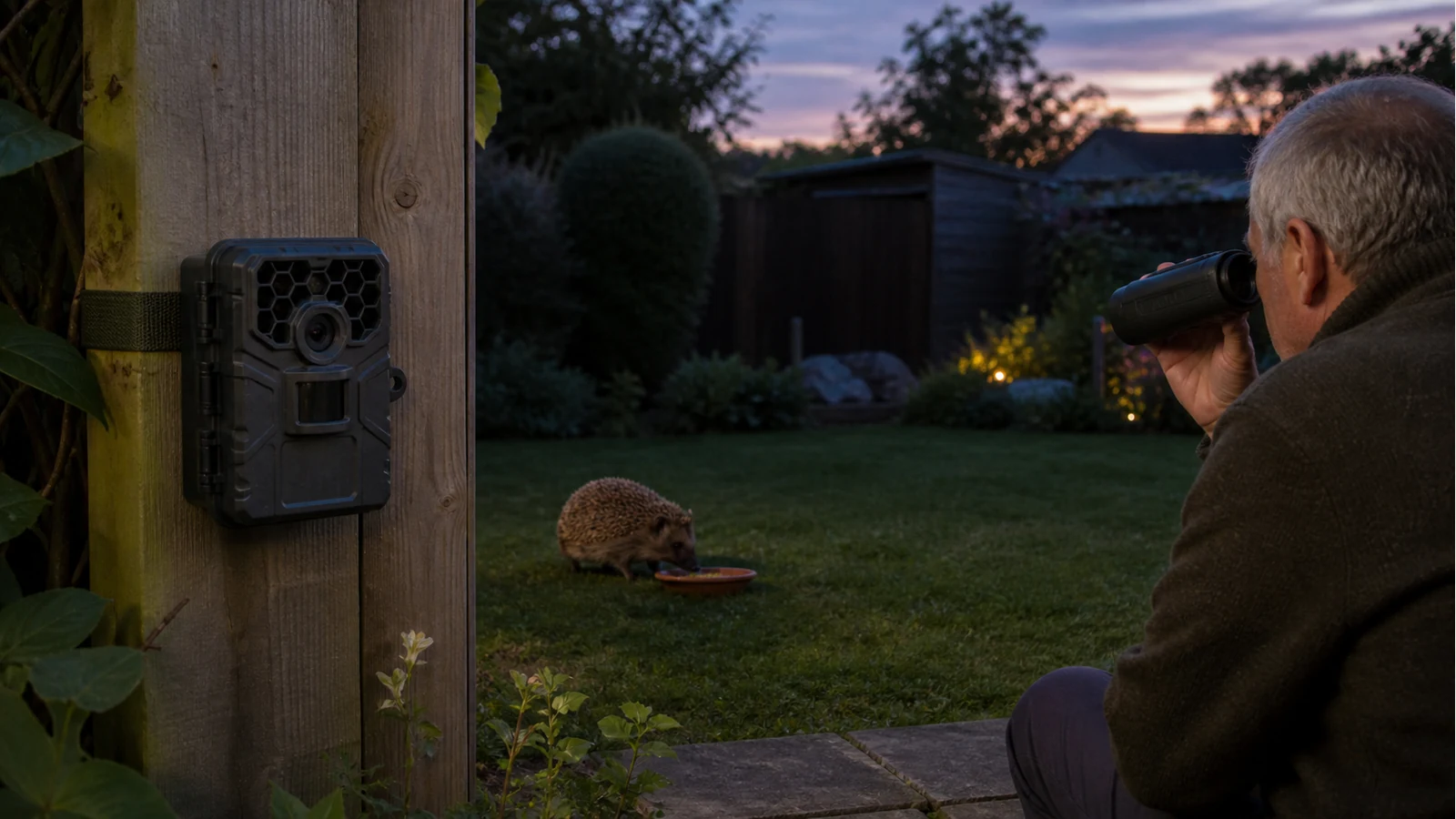
That difference matters for hedgehogs, foxes, badgers and cats because each tool changes the evening routine. A trail camera is a set-and-forget witness. A handheld night vision viewer is closer to binoculars: you are present, you scan quietly, and you decide when to record or simply watch.
The quick decision table
| Garden job | Better first choice | Why |
|---|---|---|
| You want to know what emptied the food dish overnight | Trail camera | It can trigger while you sleep and collect clips without you being outside. |
| You want to sit up and watch hedgehogs or foxes live | Handheld digital night vision | You can follow movement in real time without sweeping a bright torch across the garden. |
| You need clips to share with family tomorrow | Either | Trail cameras are automatic; many digital viewers can also record when you are present. |
| You need a device left outside in changing weather | Trail camera, if weather rated | Handheld electronics should not be treated like permanent outdoor fixtures unless their rating clearly says so. |
| You want the lowest-effort setup | Trail camera | Once positioned, it watches without you holding or charging it for each session. |
Where trail cameras make more sense
Trail cameras are strongest when your question is: "What happened when I was not there?" UK wildlife camera advice commonly focuses on IR night capture, trigger speed and placement for animals such as hedgehogs and foxes; UK garden wildlife camera guidance and NatureSpy's garden camera advice both treat them as unattended monitoring tools.
That makes them useful if you are trying to confirm a hedgehog route, see whether a fox is visiting, or check whether a cat is taking food. The trade-off is emotional as much as technical: you often discover the moment after it happened.
Where handheld night vision is better
Handheld digital night vision is strongest when your job is live watching. Home and garden wildlife writers often frame night vision binoculars as a way to observe hedgehogs and other nocturnal visitors while they are active; Home & Roost's hedgehog night-viewing guide makes that live-observation distinction clear.
In a typical UK back garden, you are often watching across a patio, lawn or feeding station rather than across fields. That means comfort, simple controls, close-range clarity and the behaviour of the infrared illuminator are more useful questions than a dramatic maximum-distance claim.
Low-disturbance viewing
Neither tool gives permission to crowd wildlife. Keep distance, avoid white light, stay quiet and use the lowest illumination that lets you see. If hedgehogs are your main interest, read the separate guide on whether hedgehogs can see infrared light before assuming any red glow is irrelevant.
Who should choose what tonight?
Pick a trail camera if you will not sit out, if you need a reliable overnight log, or if the device must be left in place. Pick digital night vision if you want the live experience: a cup of tea by the back door, a clear view of the feeding station, and the option to record only when something interesting appears.
If you are still choosing your first device, the plain-English beginner night vision guide will help you decide whether digital night vision fits your garden habits before you spend money.