Does Digital Night Vision Detect Heat?
Digital night vision does not detect heat. Learn how reflected near-infrared light differs from the thermal radiation used by thermal imagers.
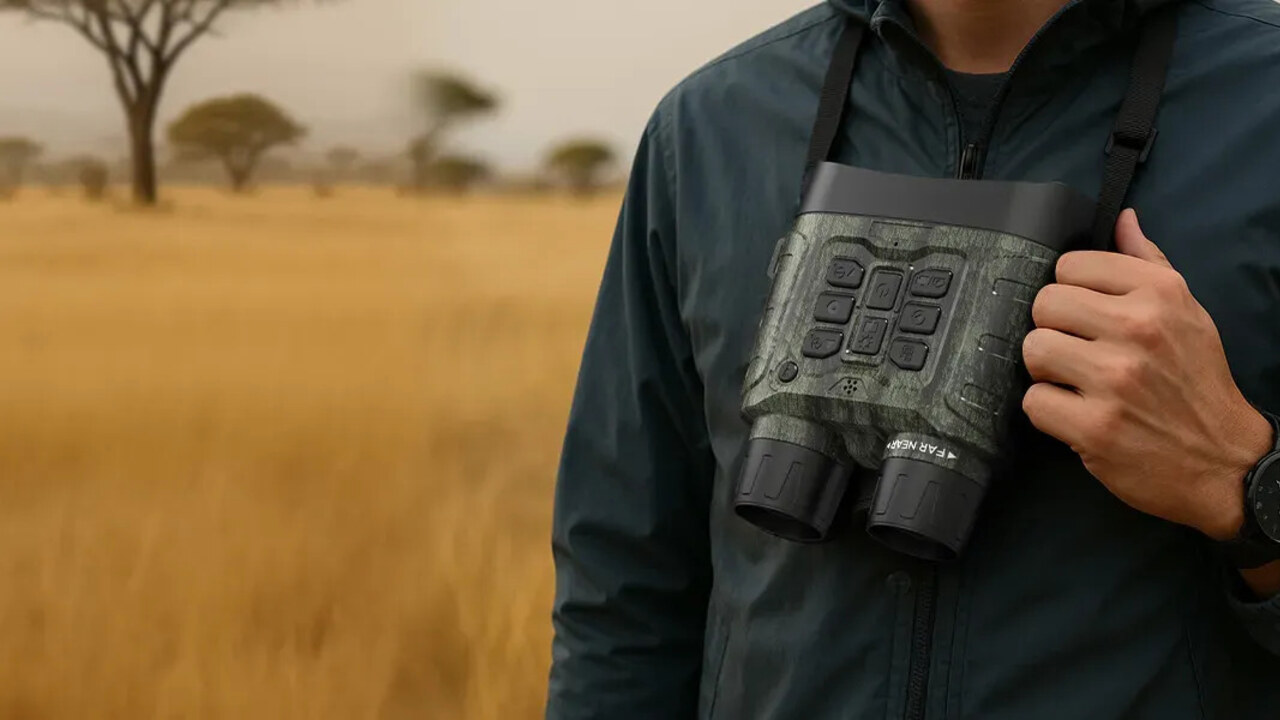
No—digital night vision does not detect heat. It creates a picture from visible and near-infrared light reflected by the scene, sometimes using a built-in IR illuminator as an invisible lamp. A thermal imager instead senses thermal infrared radiation emitted by objects and turns differences in that radiation into a picture, so the technologies are not interchangeable.
Why “infrared” does not automatically mean heat
The confusion starts with the word infrared. It describes a broad region of the electromagnetic spectrum, not one single type of image. Near-infrared light sits just beyond visible red light, whereas the longer wavelengths commonly used for thermal imaging are much farther along the spectrum.
That wavelength difference is substantial. An 850nm night-vision illuminator works at 0.85 micrometres. NASA describes roughly 8–15 micrometres as thermal infrared used to study long-wave energy radiated by the Earth. A detector designed to respond to reflected 850nm light is therefore not automatically able to sense the longer-wave thermal radiation associated with body heat.
Calling both systems “infrared” is technically understandable but practically misleading. It is rather like calling a radio and a camera the same device because both respond to electromagnetic waves: the wavelength, detector and purpose determine what each instrument can reveal.
How digital night vision actually makes an image
Digital night vision follows a camera-like process. A lens collects available visible and near-infrared light, an electronic image sensor converts that light into a signal, processing makes the signal usable, and a screen displays the result. Our guide to how digital night vision works explains that imaging chain in more detail.
When the scene is too dark, an IR illuminator supplies light the sensor can detect. The beam strikes an animal, tree, fence or other object and some of it returns to the lens. This is active illumination: the device has provided its own light, but it is still forming the picture from reflected light.
Consequently, a bright area on the screen is not a temperature reading. Surface material, colour, distance, angle, moisture, focus and the amount of illumination can all affect how much light returns. Pale fur or a reflective sign may look bright despite being cold; dark clothing may look subdued despite being warmed by a person underneath it.
What a thermal imager detects instead
A thermal imager uses a sensor made for longer-wave infrared radiation. Everyday objects emit thermal energy, and the amount and pattern vary with temperature and surface properties. The imager detects differences in incoming thermal radiation, then represents them as greyscale or false colours that human eyes can interpret.
This lets thermal equipment create contrast without moonlight, starlight or an IR lamp. A warm animal may stand out from cooler ground because the animal and background have different thermal signatures. Digital night vision cannot create that contrast merely because its picture is monochrome or because its illuminator is labelled infrared.
Thermal imagery should not be treated as a perfect thermometer, either. Apparent temperature can be affected by emissivity and reflected thermal energy. The important distinction here is simpler: thermal equipment is designed to detect thermal radiation, while ordinary digital night vision is designed to image reflected visible or near-infrared light.
What this means during observation
The distinction changes how you should interpret what appears on screen:
- A cold object can be clearly visible to digital night vision if it reflects enough ambient or illuminated light.
- A warm animal does not acquire a special “heat glow”; it is visible because light returns from its body and surroundings.
- An animal hidden behind dense vegetation will not be revealed as a heat-shaped outline by digital night vision.
- Raising the IR level adds more illumination. It does not increase heat sensitivity or convert the sensor into a thermal detector.
- In complete darkness, active IR can still produce an image, but the operating principle remains reflected light.
This also explains why foreground branches, mist, rain or reflective surfaces can cause glare or reduce useful detail. They may return much of the illuminator’s light before it reaches the intended subject. Heat is not being lost from the display; the reflected-light path is being disrupted.
Does the HotPeak device have heat detection?
No. Our HotPeak NV4000 camouflage binoculars show a digital picture on the inner 3.0" 800 × 480 screen. After dark, raise the 3 W 850 nm infrared lamp across 7 levels.
Video sizes in the menu include 4K, 2K, 1088P, 1080P, 720P, VGA and QVGA. Raise IR when the scene is dark; the picture comes from the infrared lamp and the light already in the view.
Judge the view by whether the screen shows enough detail for garden checks, camping or wildlife watching. The physics above is the reliable guide: an 850nm digital sensor images reflected infrared light, not emitted heat, so a warm and a cold object of the same material and finish look alike on screen.
For practical use, judge the device by whether it returns enough visual detail for the observation task. If the task specifically requires finding a subject from its emitted body heat, including where reflected-light contrast is inadequate, that requires thermal-sensing equipment rather than digital night vision.
Frequently asked questions
Can infrared night vision see body heat?
No. Standard digital IR night vision sees near-infrared light reflected from a person or animal. Detecting emitted body heat requires a thermal sensor designed for longer infrared wavelengths.
Why can a person look bright in digital night vision?
The person, clothing and nearby surfaces are reflecting ambient or illuminator light towards the sensor. Screen brightness depends on that returned light and image processing, not simply on body temperature.
Does a stronger IR setting add heat detection?
No. A stronger setting supplies more near-infrared illumination. It may change image brightness or useful distance, but it does not alter the detector’s wavelength range or turn reflected-light imaging into thermal sensing.
Can digital night vision work in total darkness?
Yes, if an IR illuminator provides enough light for the scene and distance. The resulting image still comes from reflected near-infrared light; total-darkness operation does not make the device thermal.